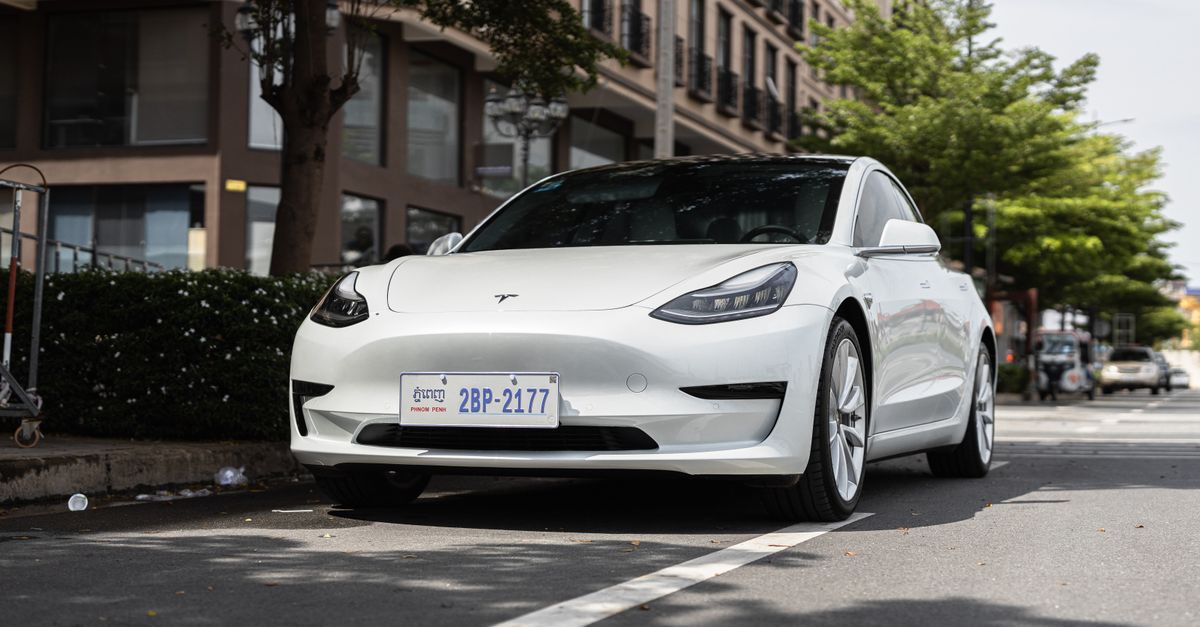
Two distinct Tesla signals in California are worth reading together, even though they’re different in nature: solid sales performance in this critical market, and a new adaptive headlights law that could shift the dynamics for the whole US auto sector.
California as Tesla’s barometer
California has always been Tesla’s reference market — geographically, symbolically, and commercially. It’s where the Model S launched, where the earliest adopter customer base was built, and where EV market share is highest in the US.
Maintaining strong performance in California in 2026 isn’t trivial. The California EV market is now far more competitive than it was in 2019 or 2021: Hyundai, Kia, Ford, GM, Rivian, and Chinese automakers (where tariffs allow) are all fighting for share. If Tesla continues to perform well in this environment, that’s a sign of real product and brand strength.
California owner loyalty also has an identity dimension. Many California Tesla owners have a relationship with the brand that predates recent turbulence tied to Elon Musk’s public profile. These customers tend to stay in the Tesla ecosystem for practical reasons — Supercharger network, software compatibility, usage habits — as much as ideological ones.
The new headlights law: what changes
The second California Tesla news thread is regulatory. A new adaptive headlights law — which allows headlights to orient based on steering direction and modulate intensity based on traffic conditions — changes what’s legal and required for vehicles operating in California.
For Tesla specifically, this is a two-way read. On one hand, Tesla has previously faced recalls related to its headlight systems (notably around automatic high-beam adjustment). On the other hand, the new regulation potentially opens the door to deploying via OTA (over-the-air software update) adaptive headlight capabilities that Tesla may already have in reserve.
The auto industry has long awaited regulatory clarity on adaptive headlights in the US — the EU had allowed these systems for years while American rules limited them. If California leads the way, other states may follow.
What this says about Tesla’s overall position
California is both Tesla’s past and its future. It’s where the brand was built, and it’s on this market that brand health signals are most legible.
Solid performance in a more competitive environment, combined with the ability to navigate new regulatory requirements through software updates, confirms what Tesla has always done well: turning constraints into opportunities to demonstrate the superiority of a software-first automotive architecture.
The headlights piece is actually a microcosm of why that architecture matters. A traditional automaker can’t push an update to improve headlight behavior in the field. Tesla can — if the regulatory permission exists. California just expanded that permission.