The Third Space: Where Beauty Becomes Science
When Dennis Paphitis established Aesop in Melbourne in 1987, beauty markets cleaved sharply: pharmaceutical efficacy on one pole, luxury theatricality on the other. Aesop refused both. The founding proposition was singular—a brand built on botanical formulation and compositional rigor, wrapped in a visual language so austere it bordered on institutional.
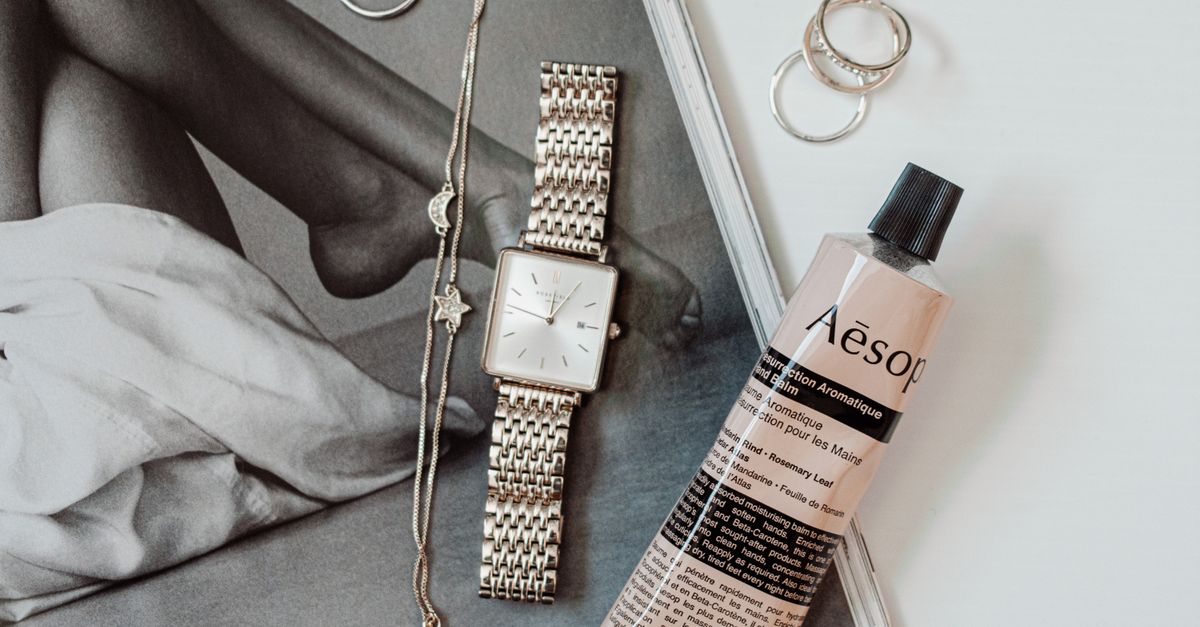
The brown flexible bottles, the spare labeling, the total absence of color coding: these choices encode a philosophical stance. They communicate that beauty does not seduce through surface but through substantive claim. There is no exotic origin narrative, no premium scarcity framing, no celebrity endorsement. The packaging declares itself as functional object rather than status symbol, collapsing the distance between pharmaceutical and luxury through the assertion that efficacy itself is the luxury.
This positioning could have remained niche, even alienating. Instead, Aesop built a global presence because the brand satisfied an emerging consumer logic: the understanding that genuine luxury consists in the refusal to perform luxury. Affluent consumers, particularly in metropolitan contexts, were increasingly suspicious of ostentation. Aesop arrived as permission to purchase prestige without visibility—to spend extensively while maintaining intellectual distance from consumption itself.
Retail as Architecture, Architecture as Worldview
Aesop stores operate according to principles derived from medical consultation rather than commercial theater. Spatial logic is determined by user need: where products are deployed according to skin concern or treatment sequence, not gamified scarcity or visual hierarchy. The furniture is minimal; the lighting is cool; the materials suggest durability over seduction.
This retail philosophy anticipated the “quiet luxury” lexicon by twenty years. Unlike contemporary minimalism, which is often deployed as aesthetic styling—a marketing layer—Aesop’s austerity follows from logical necessity. The spaces function as consulting rooms where the transaction is knowledge exchange, not desire capture.
The geographic strategy mirrors this intellectual orientation. Flagstores occupy prime commercial zones but also neighborhoods populated by architects, designers, and cultural professionals—demographics for whom minimalism functions as native language. Each location becomes an urban landmark, a countercultural statement within the landscape of spectacular consumption.
Integration and Autonomy: The L’Oréal Acquisition
L’Oréal’s acquisition of Aesop in 2023 presented a critical juncture. Large cosmetics groups have historically absorbed brands through assimilation—subordinating acquired identities to corporate marketing apparatus and standardized distribution infrastructure. L’Oréal chose otherwise, preserving Aesop as an autonomous entity with separate governance and editorial authority.
This decision reflects a larger strategic recalibration within the luxury sector. When prestige depended on symbolic accumulation—logos, brand colors, instant recognition codes—visibility seemed synonymous with value. Contemporary markets have inverted this logic. Messaging saturation and algorithmic fatigue have generated consumer preference for discretion, for excellence that refuses to announce itself.
Aesop’s integration within L’Oréal also addresses a business reality: the group captures affluent consumers with high cultural capital who reject superficiality and seek in beauty an expression of intellectual values rather than social status assertion. This segment has expanded materially over the past decade, particularly among younger affluent consumers in developed markets.
The Grammar of Minimalism: Unmistakable but Inimitable
Aesop’s identity achieves something rare in global branding: pervasive recognition rooted in absence rather than presence. The brown bottle is iconic precisely because it offers no visual excess to process. The typographic approach is severe. The product line is curated, never bloated. Copy is technical, never aspirational.
This grammar of restraint has induced numerous imitators within the prestige beauty landscape. Yet direct imitation becomes impossible. A brand cannot adopt minimalist aesthetics without the underlying commitment to formulation and retail experience—attempting to do so reads immediately as affectation, as marketing rather than philosophy. Aesop’s power lies in the irreducible integration of its parts: design serves efficacy; retail environment extends the promise of the product; copy reinforce both.
Innovation at Aesop proceeds through accumulated refinement rather than categorical addition. New products extend existing formulation logics. Packaging evolves in response to material performance, never aesthetic fashion. Campaign narratives circle persistently around botanical sourcing, dermatological craft, spatial architecture—the consistent preoccupations of the founding vision.
A Durable Exception
Three decades after its establishment, Aesop remains an exception within L’Oréal’s diversified portfolio—valued precisely because it refuses to homogenize. The brand has demonstrated that prestige can accrue through intellectual coherence rather than status performance; that luxury need not announce itself; that the refusal to please can generate deeper forms of loyalty than conventional marketing seduction.
Aesop illustrates a principle rarely executed in beauty: that a brand achieves durable prestige by resisting the pressures that generate prestige. This requires a form of corporate discipline that many organizations find untenable. Yet for Aesop, inconsistency would be catastrophic—it would collapse the founding distinction between authentic substance and marketing performance.
As consumer skepticism toward beauty marketing deepens and minimalist design becomes culturally ascendant, Aesop’s foundational positioning grows more relevant rather than dated. The brand has not adapted to a trend; a trend has evolved toward the brand’s original commitment. In an industry built on transience, this durability is itself the story.