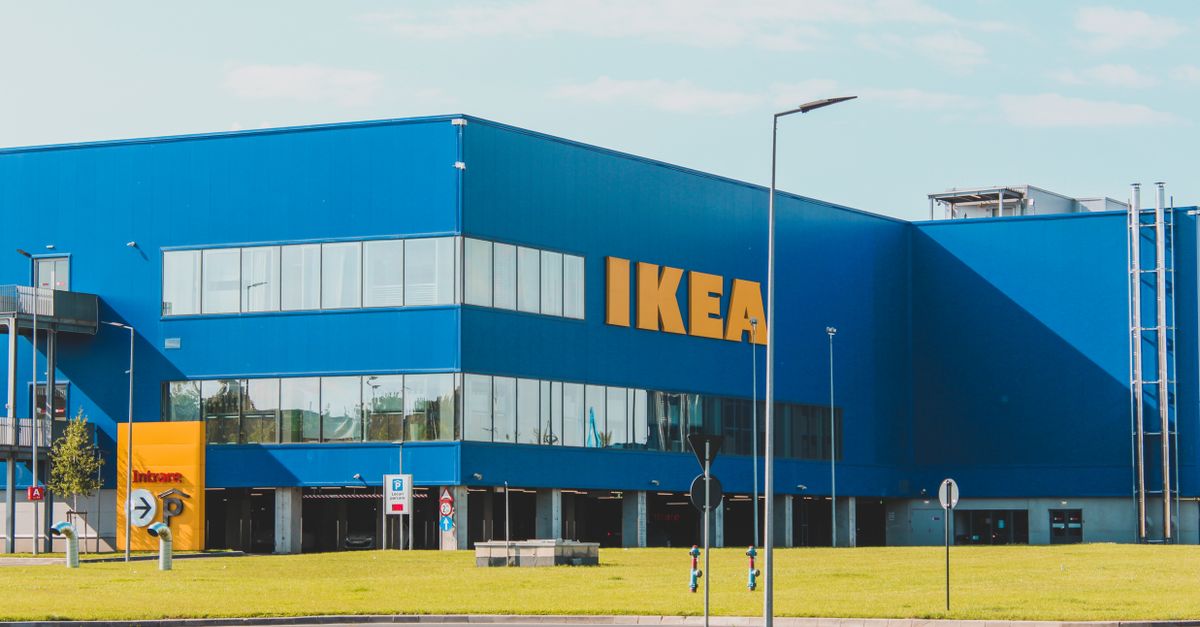
Two stores in one month, six planned in total. IKEA is accelerating across the Delhi-NCR (National Capital Region) at a pace that contrasts sharply with the years of careful approach the company initially needed to enter India. The second Delhi-area store is set to open July 30, and the Swedish retailer has signaled its intention to establish up to six locations in this densely populated economic zone.
India: the market that almost slipped away from IKEA
IKEA’s entry into India is one of the longer sagas in the group’s international expansion. Negotiations with the Indian government took years — foreign direct investment rules in retail were long a barrier — before the first store opened in Hyderabad in 2018.
Since then, the strategy has accelerated. Mumbai, Pune, and Bengaluru followed. Delhi-NCR represents the next critical link: it’s the most densely populated region in the country, with a rapidly expanding middle class and urbanization patterns driving growing demand for functional, affordable furniture solutions.
Why Delhi-NCR is a different challenge than other Indian cities
The Delhi-NCR region — encompassing Delhi, Gurugram, Noida, Ghaziabad, and Faridabad — concentrates roughly 30 million people and represents one of India’s most competitive retail markets. It’s also a zone where purchasing behaviors differ meaningfully from Mumbai or Hyderabad: more urban habits, smaller apartments on average, and a strong sensitivity to value for money.
That’s precisely the customer profile IKEA was historically built for — smart solutions for constrained spaces at accessible price points. The value proposition fits well.
That said, Delhi-NCR also has a dense local furniture supplier ecosystem (carved wood, traditional furniture, artisan districts) that doesn’t exist in the same proportions in Mumbai or Hyderabad. Local competition will be more structured.
Six stores: a geographic coverage logic
The ambition of six stores in the region isn’t an arbitrary number. It’s the density needed to make the IKEA model viable in a sprawling city-region where mobility can be a barrier to purchase.
In IKEA’s mature markets (France, Germany, Sweden), store location logic follows suburban traffic flows. In India, the geography is different: traffic is dense, distances can be significant, and a customer won’t drive two hours to buy shelves. Multiplying presence points is a condition for capturing customers that distance would otherwise exclude.
What this says about IKEA’s India strategy
India is one of IKEA’s most important long-term bets. E-commerce competition there is intense — Flipkart, Amazon India, and Urban Ladder all have established positions in furniture and home décor — but IKEA’s advantage lies in the showroom experience: touching, seeing, imagining in reconstructed living spaces that digital can’t fully replicate.
The acceleration across Delhi-NCR suggests that results in other Indian markets have been positive enough to justify picking up the pace. This isn’t a blind bet — it’s an extrapolation from real performance data. That’s what makes the six-store ambition feel credible rather than merely optimistic.
The real test will be execution in a city that adds layers of logistical complexity that even IKEA’s seasoned international teams will need to navigate carefully.