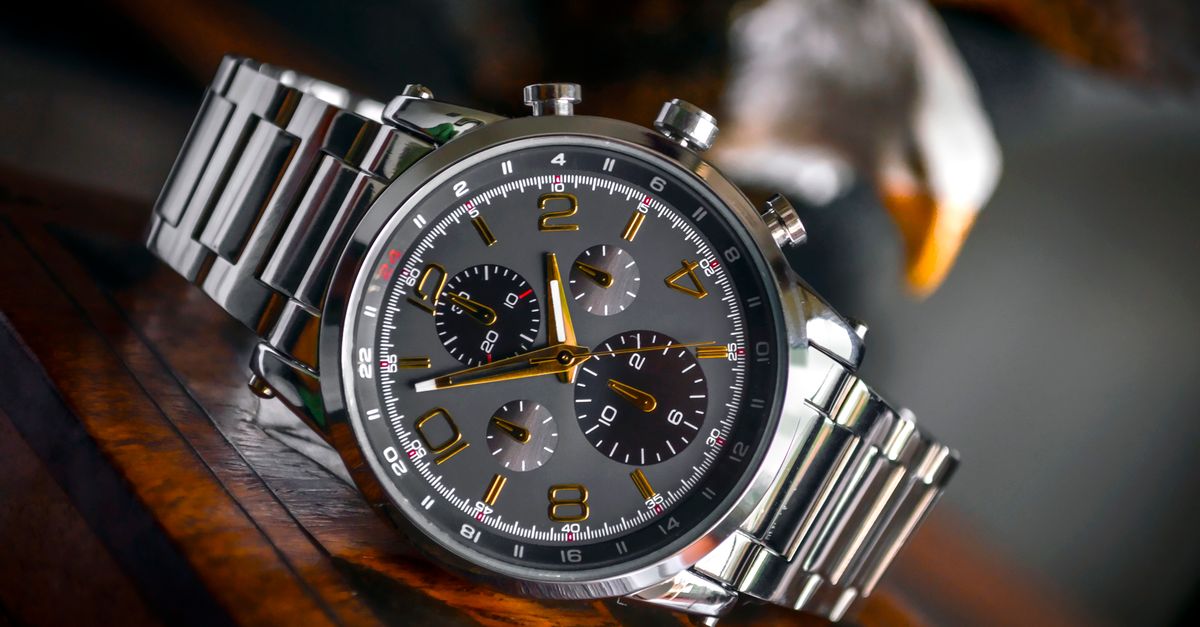
Buying your first luxury watch marks a turning point. You transition from an object defined by function to a companion you will wear for decades — and you confront your budget against the realities of craftsmanship and brand credibility. Between EUR 2000 and 5000, the landscape is far from narrow. It includes five watchmakers that have durably built their reputation among collectors and horological professionals alike. Each carries a singular heritage, a construction philosophy of its own, and a maintenance network that only houses anchored in history know how to mobilise.
Omega Seamaster: accessible sporting heritage
Omega built its standing on two pillars: technical precision and historical depth. The Seamaster embodies both. Born in 1948, this dive watch became synonymous with reliability in extreme environments — from underwater expedition to space, where it accompanied extravehicular activities.
Buying a Seamaster between EUR 2000 and 3500 grants you access to a Chronometer-certified movement (precision validated by an independent body), a case rated to 300 metres of depth, and hands-on exposure to incremental technical mastery. What marks Omega’s offer is this blend of performativity and restraint: the watch works, it will hold for four decades, and it will look the part.
Tudor Black Bay: coherent alternative
Tudor was long perceived as the commercial junior sibling of Rolex — a parental strategy to reach tighter budgets. This positioning crystallised into a distinct strength. The Black Bay, launched in 2012, became a reference point in “no-nonsense” watchmaking: black dial, unidirectional bezel, steel bracelet, aesthetic of military dive watches.
For EUR 2500 to 4000, a Black Bay delivers a Sellita movement (Swiss, proven), a robust 41 mm case, and an ethos that rejects ostentation: this is a watch to wear, not to display. Tudor’s network for servicing and pre-owned transactions rivals Rolex’s own — meaning your initial investment will hold its ground.
Longines Master Collection: metronomic elegance
Longines does not play to the spectacular. The Geneva manufacture specialises in the concept of useful elegance: watches that function, that please the eye, and that make no promises they cannot keep. The Master Collection, in its 42 mm automatic configuration, sums up this philosophy.
At EUR 2500–3500, the Master Collection offers an in-house movement (L888.4), a Geneva-finished case with precise machining, and an aesthetic of office-friendly timekeeping that does not age poorly. Seasoned collectors recognise Longines for its stability and restraint: it is not the brand that shouts; it is the brand others notice after you have worn it unchanged for ten years.
TAG Heuer Carrera: accessible chronograph landmark
TAG Heuer played, for years, between aspiration and budget reality. The Carrera, a chronograph precision tool launched in 1963, became this meeting point. In its 42 mm Automatic variant around EUR 3500–4500, it is an instrument that does not compromise on its primary function: reliable timing.
The Carrera gives you access to chronograph vocabulary — pushers, totalisers, tachymetre scale — without the sensory overload of higher-tier models. It is also an entry point for learning chronometry basics: how to read a chronograph, how a succession of micro-gears functions.
Nomos Tangente: German horological thinking
Nomos offers no exotic adventures. The Glashütte manufacture chose to position itself on the principle that less is more — wristwatches that aim simply to be precise and honest.
The Tangente, in 35 or 38 mm, is the threshold. Between EUR 2000 and 2800, it integrates an in-house movement, finishing that purists appreciate (visible chronometry, delivered balance wheel), and deliberate abstinence from flourish: white or blue-grey dial, straight indices, spare hands. Horological Bauhaus, in short. For those seeking a watch rooted in an intellectual genealogy — that of precision without ornament — it is an anchor point.
What these five houses share
Beyond their stylistic differences, these manufactures converge on five elements: a certified or proven movement, adequate water resistance (300 m minimum), documented repairability, more than one generation of history, and a viable service network. None promises eternity; all understand you will return for overhauls, sapphire crystal replacement, or mainspring service.
These houses also share a common imperative: observable precision. Whether displayed through visible finishing (Nomos), external certification (Omega), or recognisable client histories (Longines), precision never remains an unsupported claim. This represents an approach that distinguishes these manufactures from brands that lean more on image than on actual mechanism.
Durability is another shared anchor. A watch from these houses does not become obsolete after ten years. Replacement components (bracelets, seals) remain available. Dials can be refinished by official workshops. The mainspring can be replaced without demoting the entire movement. These are the hallmarks of a piece conceived to endure, not to be replaced.
This consensus, more than divergent aesthetics, constitutes the foundation of these choices for a first luxury watch. Your selection is not a status statement — it is a decision to learn and companion with a technical object you will value all the more as you grasp its inner workings. And that understanding naturally deepens over years of daily or occasional wear.