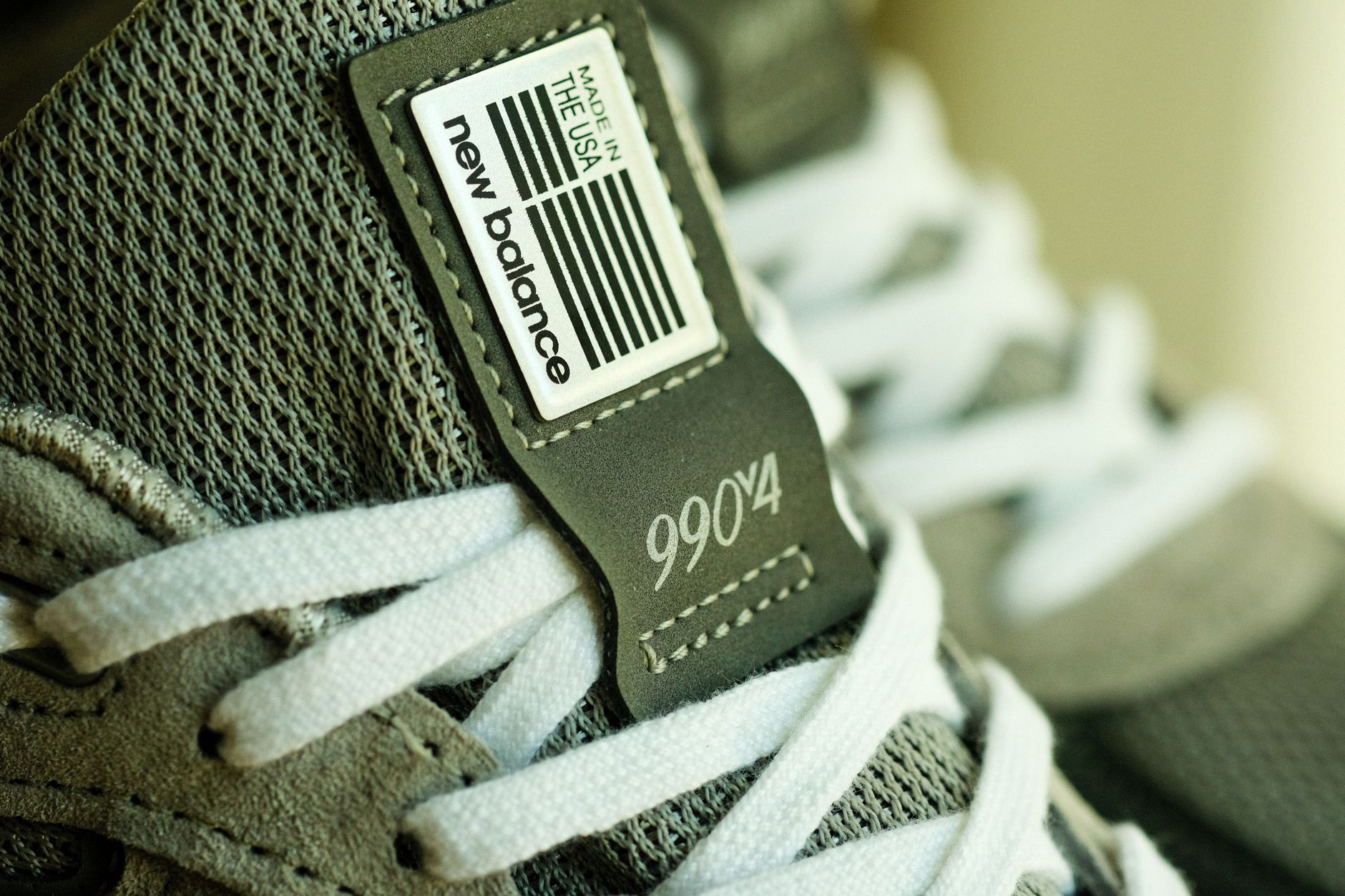
There is a particular confidence required to release a sneaker that looks like it has already been worn. The New Balance x Concepts 990v4 Patina makes exactly that proposition: a brand-new shoe dressed in the language of years of careful use, built on one of the most respected heritage silhouettes in the American sneaker market. It is a collaboration that says more about where the industry is heading than most limited releases manage to communicate.
The 990v4: a foundation that earns its reputation
The 990 line has occupied a singular position in New Balance’s catalogue since its original release in 1982, when it became the first sneaker to carry a $100 retail price. That price point was justified not by marketing or celebrity endorsement but by construction: premium materials, Made in USA manufacturing, and a level of comfort that became the model’s defining characteristic across successive versions.
The v4 iteration, specifically, holds a particular status among collectors and daily wearers alike. It is often cited as the version that best balances the original 990’s design language with modern cushioning technology. The silhouette is restrained, the proportions precise, the materials durable. It is not a shoe that demands attention; it is a shoe that rewards it.
Choosing the 990v4 as the canvas for the Patina concept is a decision that reveals how well Concepts understands New Balance’s audience. This is not a model that benefits from dramatic reinvention. It benefits from thoughtful reinterpretation — and that is precisely what Concepts has delivered.
What “patina” means as a design philosophy
The term patina, borrowed from metalwork and leather goods, refers to the surface changes that occur through sustained use and exposure to the elements. In furniture, watchmaking, and leather craft, patina is understood as evidence of quality: only materials worth keeping develop it, and only owners who care for their objects see it emerge.
Applied to a sneaker, the concept translates into intentional treatments on suede and mesh panels, color choices that suggest natural fading, and finishing details that give the shoe the character of a well-maintained pair pulled from years of rotation. The effect is not distress — the shoe does not look damaged — but rather maturation. It suggests history without implying neglect.
This approach is commercially significant because it aligns with a broader shift in consumer preference. Across multiple product categories, the appetite for pristine, factory-fresh aesthetics has been gradually displaced by an appreciation for objects that carry visible evidence of their own timeline. Vintage watches, raw denim, waxed canvas — the patina economy extends well beyond footwear, and the 990v4 Patina positions itself squarely within that movement.
Concepts: the retailer as creative authority
Concepts was founded in Cambridge, Massachusetts, in 1996. Over three decades, it has built a reputation that extends far beyond retail. The store has become one of the sneaker industry’s most credible creative partners, known for collaborations that demonstrate genuine design direction rather than surface-level branding exercises.
The geographic and cultural proximity between Concepts and New Balance — both rooted in the Boston metropolitan area — gives their joint projects an authenticity that is difficult to manufacture. This is not a transactional partnership assembled by a marketing agency. It is a relationship built on shared geography, shared customer base, and a shared understanding of what makes a New Balance shoe worth wearing.
That credibility matters in a market saturated with collaborations. The sneaker industry produces dozens of partner releases each month, and the consumer’s ability to distinguish between meaningful creative partnerships and label-swapping exercises has grown considerably sharper. Concepts has maintained its standing precisely because its collaborations consistently demonstrate a level of care and intentionality that justifies the partnership’s existence.
The 990v4 Patina is a clear example. The patina concept is not arbitrary; it reflects the way 990 owners actually experience their shoes over time. Concepts has taken a real phenomenon — the way a well-worn 990 develops character — and elevated it into a deliberate design choice. That kind of insight comes from proximity to the product and its community, not from a brief deck.
Market positioning and what this release signals
The 990v4 Patina arrives at a moment when the sneaker market is recalibrating after several years of volume-driven release strategies. The era of releasing as many colorways as possible on as many silhouettes as possible is yielding, at least at the premium end, to a more considered approach: fewer releases, stronger narratives, deeper product development.
New Balance has been particularly effective in this shift. The brand’s collaboration strategy has consistently prioritized partners with genuine creative credentials over partners with large follower counts. The result is a collaboration portfolio that holds its value — both in terms of brand equity and resale performance — more durably than many of its competitors’ efforts.
The Patina release also highlights the growing role of specialty retailers as tastemakers in the sneaker ecosystem. As direct-to-consumer strategies become the default for major brands, the retailers that survive and thrive are those that offer something beyond distribution: curation, community, and creative perspective. Concepts exemplifies this model. Its survival and continued relevance in a market that has seen many specialty retailers close is itself evidence of the value it provides.
For the consumer, the 990v4 Patina represents a specific proposition: a shoe with documented heritage, executed with premium materials and thoughtful design direction, from a collaboration partnership with a credible track record. Whether the patina aesthetic continues to resonate beyond this season is an open question. What is less in doubt is the durability of the foundation — the 990v4 itself — which will continue to perform and age well regardless of which direction trend cycles take next.