There is a company whose products equip almost every smartphone in the world, virtually all tablets, and a growing share of computers. You probably use it every day without ever seeing its name.
ARM Holdings.
The paradox of ARM is that its success is measured by the invisibility of its brand. The more desirable the devices using its architectures, the less ARM needs to exist publicly. It is the infrastructure of consumer tech — so foundational that it disappears into the products it makes possible.
What ARM does — and doesn’t do
ARM doesn’t manufacture chips. It designs architectures — basic blueprints that define how a processor handles instructions — and licenses them to manufacturers like Apple, Qualcomm, Samsung, Nvidia, and MediaTek. These companies take the ARM architecture and customize it to their needs.
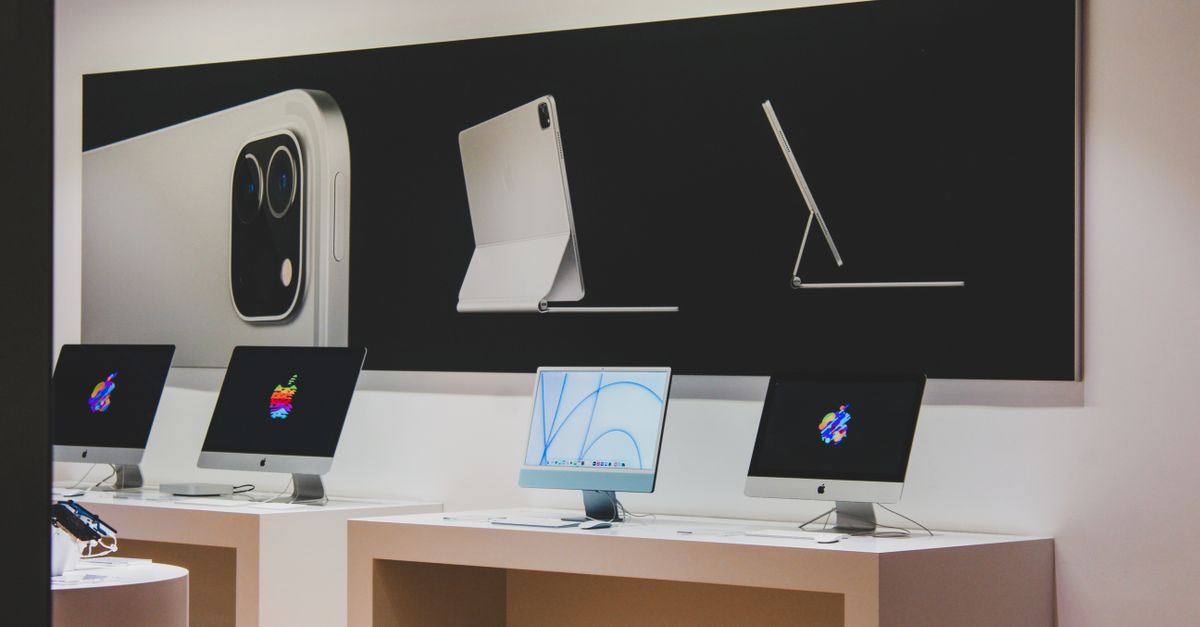
Apple Silicon, the M1 through M4 chips powering Macs and iPads, are based on ARM architecture. The same base architecture powers Qualcomm’s Snapdragon chips in Android smartphones. It’s in Amazon’s data centers (AWS Graviton), in gaming consoles (PlayStation 5), in automotive embedded systems.
This licensing model is remarkable for its scalability: ARM collects a royalty on every licensed chip, whether manufactured by TSMC in Taiwan or Samsung in Korea. No factory, no production line, no inventory risk.
The post-IPO business model
When SoftBank listed ARM on the stock market in September 2023 — one of the largest tech IPOs of the year — questions about valuation immediately emerged. The bull thesis: ARM holds an oligopoly position in a market developing in every direction (AI, automotive, IoT, servers). The bear thesis: the licensing model is mature in smartphones, and growth requires conquering new segments.
By 2026, reality looks more like the bull thesis — but with nuances.
Royalty revenues are growing, notably thanks to the shift toward more advanced architectures (Armv9) that support higher royalties. The AI server market is a significant opportunity: data centers are building massively parallel chip clusters, and ARM architecture is increasingly present.
Dependence on a small number of large customers remains a risk. Apple represents a significant fraction of ARM’s revenues. If Apple ever decided to develop a proprietary incompatible architecture, the shock would be real.
The China question
The other strategic variable is geopolitical. Arm China — the Chinese subsidiary — has operated with relative autonomy since a governance conflict in 2020. The Chinese semiconductor market is being redefined under the impact of American export restrictions. ARM finds itself in the uncomfortable position of all US or European tech companies serving customers on both sides of the fracture.
How ARM manages this tension — maintaining its revenues in China without compromising access to Western markets — is one of the most complex questions of its medium-term strategy.
Why the ARM brand is changing
There’s something interesting in ARM’s brand trajectory post-IPO. Before going public, ARM didn’t really need to exist publicly. Its B2B model required no consumer recognition.
Post-IPO, the dynamics change. Individual shareholders want to understand what they own. Tech journalists start covering ARM as a company, not just as infrastructure. The ARM brand, long invisible, needs to learn to speak to a wider audience.
This is an exercise few B2B tech companies have done naturally. Intel tried with “Intel Inside” in the 1990s — one of the rare cases where an infrastructure brand successfully created desirability with end consumers.
ARM probably doesn’t need to repeat that exercise. But understanding who it is, and why it matters, has become a commercial necessity that the discreteness of its position in the value chain had long allowed it to ignore.