In 2014, Emily Weiss launched Glossier with a simple, radical thesis: sell beauty directly to consumers, without intermediaries, through a community built on Into The Gloss. It was a clean break from the cosmetics mass retail model, dominated by Sephora, Ulta, and department stores.
Ten years later, Glossier sells at Sephora.
This isn’t an admission of failure. It’s an adaptation worth analyzing without nostalgia.
What pure DTC promised
The Direct-to-Consumer model had real advantages for Glossier: higher gross margins (no revenue split with a distributor), total control of the customer experience, access to valuable consumer data, and a community relationship that created organic word-of-mouth.
Glossier built something rare: a beauty lifestyle brand that customers actively defended, posted about on social media, and recommended to friends. The product was good, but the brand was the point — a minimalist aesthetic, communication that spoke about them, not the product.
The limits of pure DTC at scale
Where the model starts showing its limits is when growth becomes the central objective — which is inevitable once you’ve raised hundreds of millions from investors expecting a return.
Pure DTC relies on digital customer acquisition. At small scale, acquisition costs are manageable. At scale — when you need to reach customers who don’t know you yet — acquisition costs explode and margins collapse. Facebook and Instagram become obligatory partners, but also enormous cost lines.
Physical distribution, in this context, isn’t a capitulation. It’s an acquisition and awareness channel that pure DTC brands can’t easily replace.
The Sephora choice
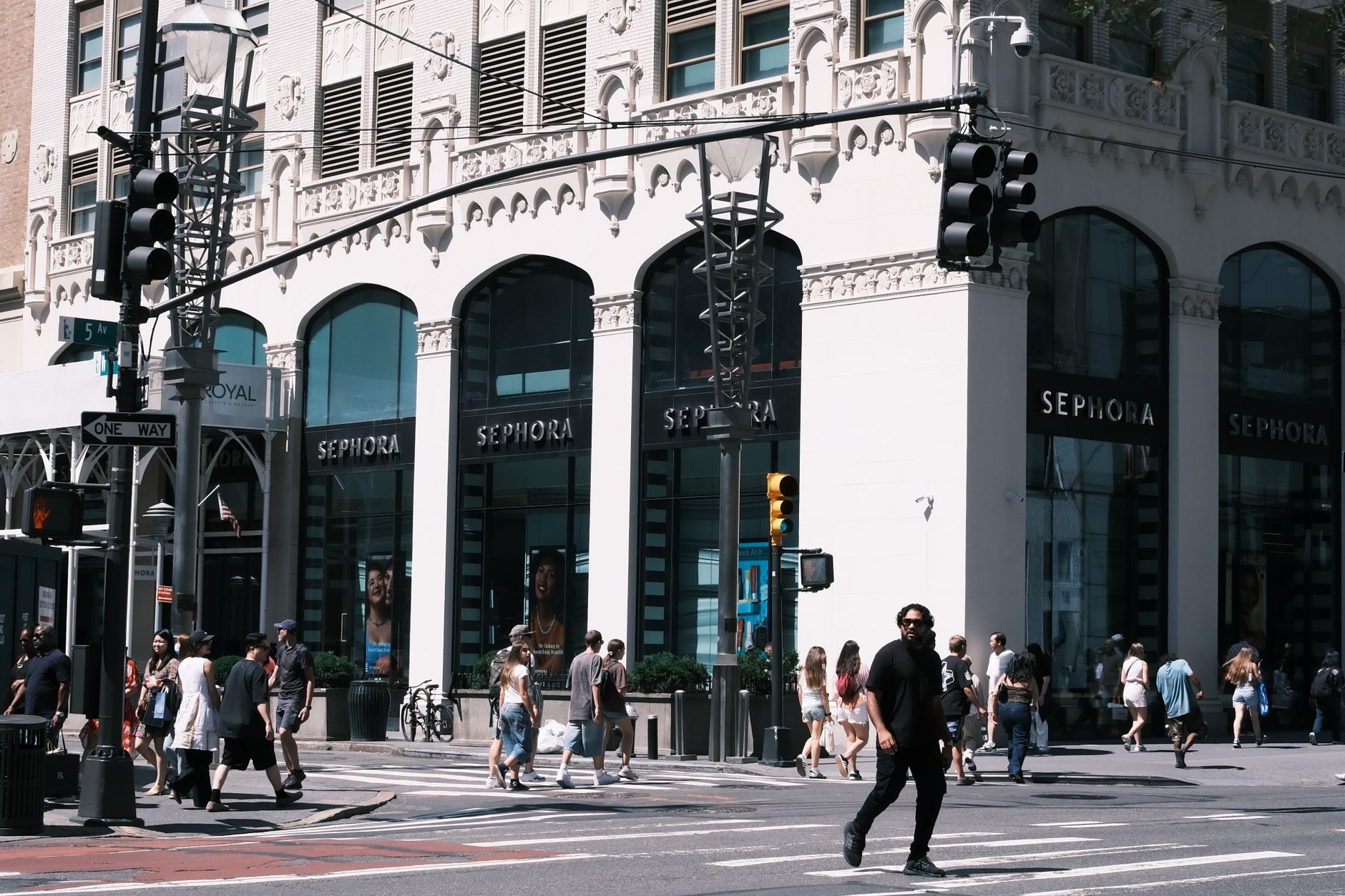
Choosing Sephora over Ulta or general mass retail isn’t incidental. Sephora is a selective distributor with a premium positioning consistent with Glossier’s identity. The retail environment is curated, staff are trained, and the customer base matches Glossier’s core target.
What’s lost in the transition: total control of the experience. At Sephora, Glossier is one product among many — even if merchandising and allocated space can limit that dilution. Direct access to customer data is also reduced.
What’s gained: massive visibility, retail legitimacy (being at Sephora is a credibility signal in the beauty industry), and volumes that allow fixed costs to be spread.
What this says about beauty DTC in 2026
Glossier isn’t alone. Many beauty brands built on DTC have learned that physical retail isn’t the enemy of DTC. It’s a complementary channel.
The question isn’t DTC vs. retail. The question is whether the brand identity is strong enough to survive selective distribution without dissolving into the mass.
For Glossier, the answer depends on how disciplined the brand is in protecting its visual and community DNA in the new context. Nothing is settled — in either direction.