There have been so many celebrity beauty brands in recent years that a certain fatigue has set in. Rihanna with Fenty — clearly different. Kylie Jenner with Kylie Cosmetics — clever, but lipstick marketing. Kim Kardashian with KKW — fame makeup. And then there’s Selena Gomez’s Rare Beauty, which deserves its own analysis.
What distinguishes Rare Beauty isn’t just product quality — real, according to user feedback — or its founder’s notoriety. It’s the coherence between the brand’s mental health positioning and the concrete commitment that backs it up.
The Rare Beauty thesis
Rare Beauty launched in 2020 with an explicit mission: change how beauty is perceived and use the brand’s platform to promote mental health.
That’s not a vague promise. The brand created the Rare Impact Fund — a fund committing 1% of annual sales to mental health organizations, with a stated goal of $100 million over 10 years. The fund’s partners are real organizations with concrete programs.
For Selena Gomez, this isn’t an invented marketing angle — she’s been speaking publicly about her own experiences with mental illness for years, well before the brand existed. Founder-mission coherence is one of the rarest elements in celebrity beauty.
The product as proof
An impact positioning has no value without products that work. This is where Rare Beauty avoids the trap of many “mission-driven” brands: the products are genuinely good.
The Soft Pinch Liquid Blush — the brand’s hero product — became a viral phenomenon for product reasons, not just marketing: intense pigmentation, easy application, long wear. In beauty, viral products have a simple driver: they deliver results people want to show off.
This product credibility is foundational. It means Rare Beauty isn’t bought out of charity or loyalty to Selena Gomez — it’s bought because it works, with the added emotional benefit of belonging to something bigger.
Distribution as signal
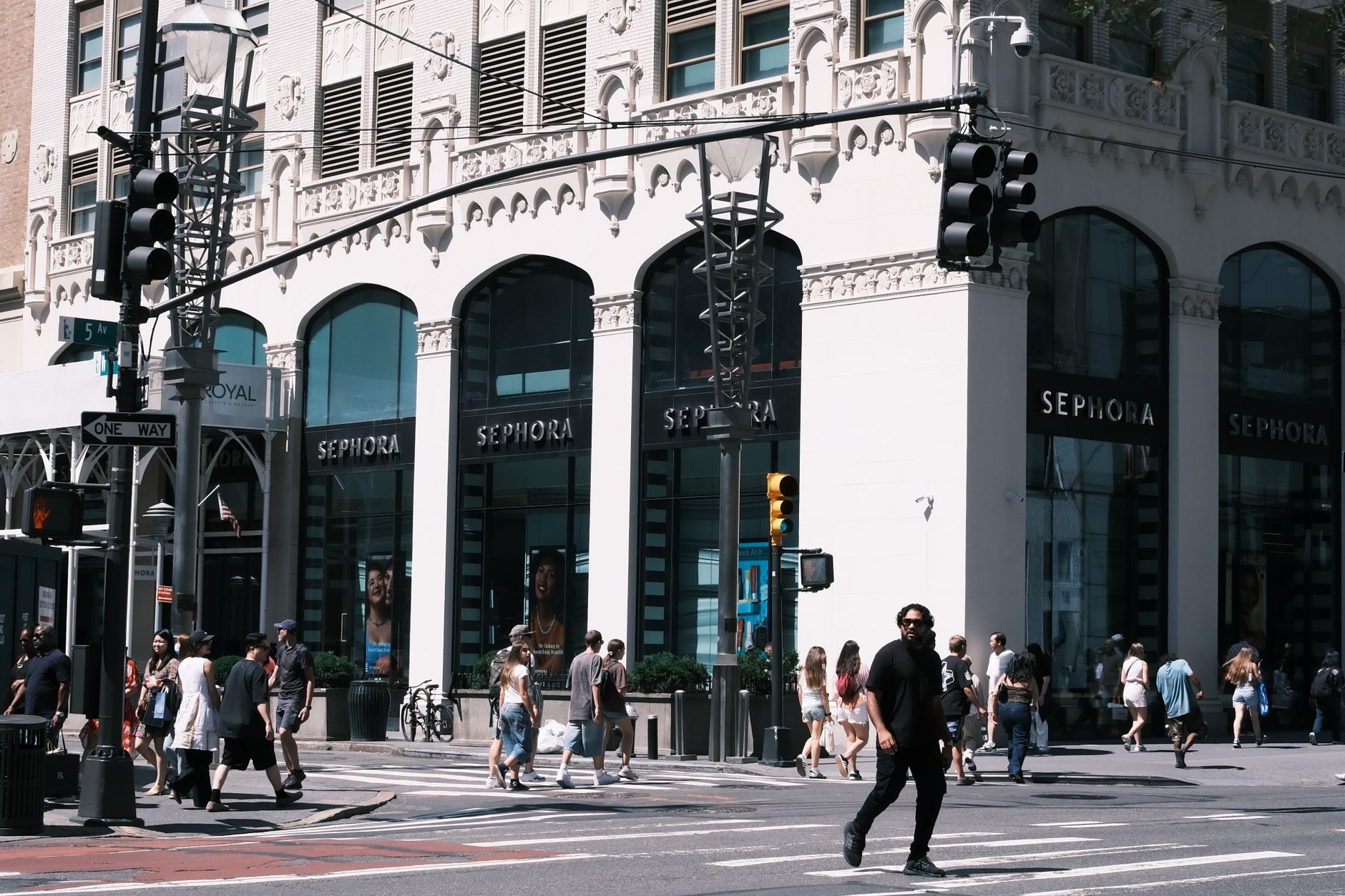
Rare Beauty is available at Sephora — which clearly positions the brand in accessible prestige. It’s the right channel for the target: a customer base aware of mental health issues, drawn to brands that take positions, and willing to pay a bit more for a brand that feels like them.
Unlike Glossier, Rare Beauty didn’t have to “give up” a DTC model to go into retail — it chose Sephora from the start. That choice says something about the initial vision: not a community niche brand, but a mainstream premium brand with a distinctive reason for being.
The limits and open questions
Rare Beauty is heavily dependent on Selena Gomez — her social media presence, her public statements on mental health, her personal credibility. That’s a real concentration of risk.
What happens if the founder steps back, reduces her activity, or public perception shifts? Does the brand have enough of its own DNA to survive distance from its creator?
The question also arises around the sustainability of the mental health positioning at scale. The topic is increasingly covered by many brands — some with sincerity, others as a simple marketing angle. Rare Beauty’s differentiation on this ground will depend on the genuine depth of its commitment versus the rhetoric.
For now, the balance tips clearly in the right direction. Rare Beauty is one of the most interesting beauty success stories of the last five years — precisely because it didn’t separate “doing good” from “being well paid for it.”